What Makes a Durable Pool Deck in Illinois?
A pool deck works harder than almost any other concrete surface on a residential property. It has to handle constant exposure to water and pool chemicals, bare feet on hot summer afternoons, heavy outdoor furniture, and the full force of Illinois freeze-thaw winters — season after season. A pool deck that isn't built with all of those conditions in mind won't just look worn out ahead of schedule; it can become a safety hazard.
For homeowners in Addison, Elmhurst, Oak Brook, and throughout the western suburbs, building a pool deck that holds up over time starts with understanding what separates a durable installation from one that begins failing within a few years. This guide covers the key factors that determine how long a pool deck lasts and how well it performs through every season Illinois delivers.
The Right Concrete Mix Matters More Than Most Homeowners Realize
Low water-to-cement ratios produce stronger, more durable concrete. Mixes with too much water may be easier to work with during the pour, but they produce a weaker, more porous finished slab that deteriorates faster under Illinois weather conditions. An experienced concrete pool deck contractor specifies the right mix for the application — not just whatever is most convenient on pour day.
Proper Sub-Base Preparation Is Non-Negotiable
The concrete surface is only as good as what's beneath it. Pool decks are particularly vulnerable to base problems because they exist in a perpetually wet environment — pool water splashing, rain collecting, and irrigation runoff all contribute to the moisture load on the soil beneath the slab.
Proper sub-base preparation starts with adequate excavation and grading to ensure water drains away from the pool structure and doesn't pool beneath the slab. Compacted gravel — typically four to six inches — provides a stable, free-draining base that minimizes settlement and resists frost heaving. Skipping or shortcutting this step is one of the most common reasons pool decks develop cracking, sinking sections, and uneven surfaces within a few years of installation.
In areas around Addison and the western suburbs where soil composition includes significant clay content, proper base preparation is especially important. Clay soils expand when wet and contract when dry, creating movement beneath the slab that accelerates cracking and settlement if the base isn't properly prepared to buffer that movement.
Thickness and Reinforcement
Pool deck slabs should be a minimum of four inches thick, with five or six inches appropriate for areas that will see heavier loads — outdoor kitchen equipment, hot tubs, or heavy furniture. Consistent slab thickness throughout the deck is as important as the average thickness; thin spots are stress concentration points where cracking initiates.
Reinforcement with fiber mesh or rebar adds tensile strength to the slab and helps control cracking if the concrete does experience stress. While concrete is extremely strong in compression, it is relatively weak in tension — meaning it resists being pushed down well but can crack when pulled apart by ground movement or thermal expansion. Reinforcement doesn't prevent all cracking, but it keeps cracks narrow and the slab together when cracking does occur.
Control Joints: Controlling Where Concrete Cracks
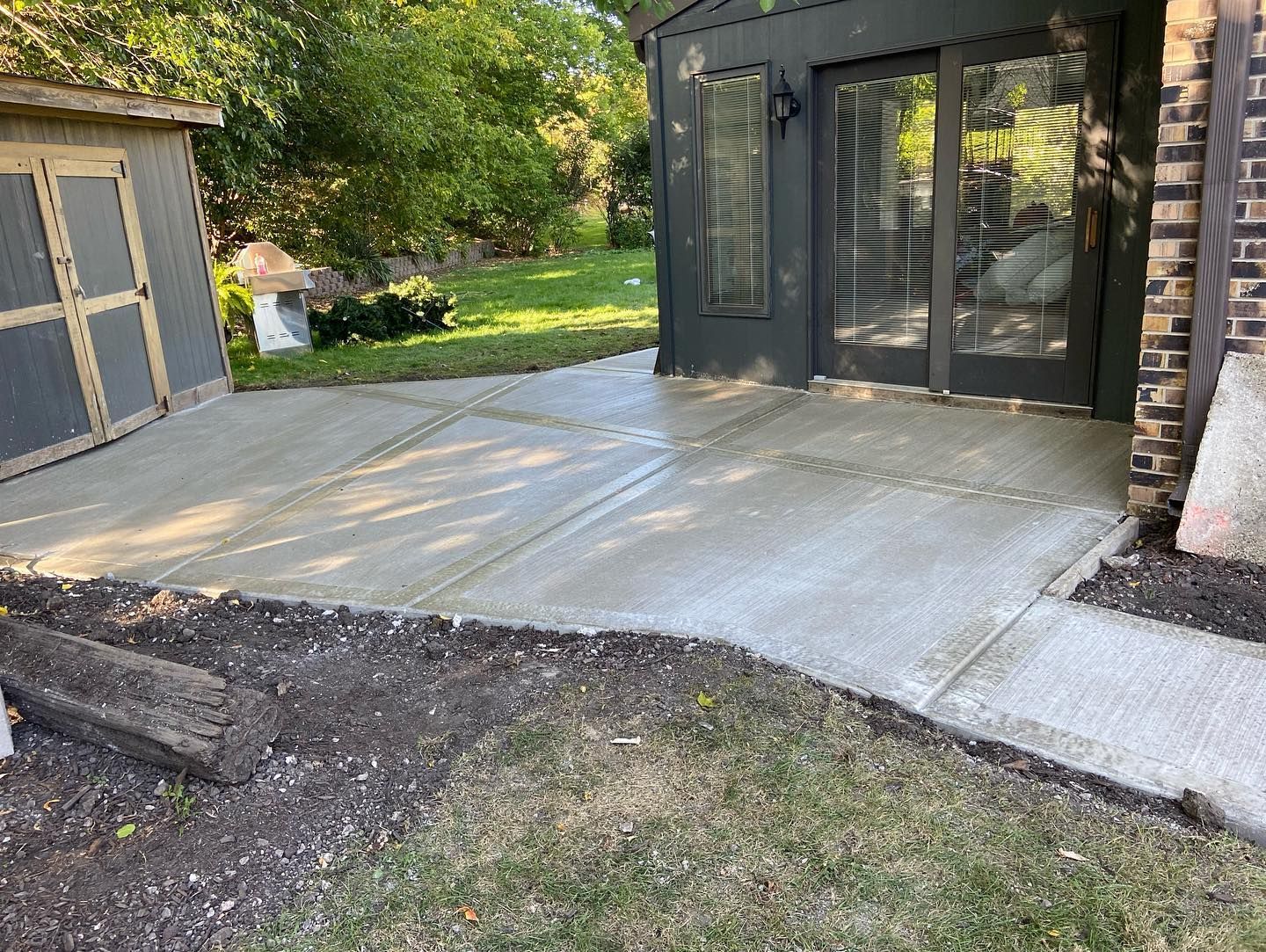
All concrete cracks eventually. The goal of a well-designed installation isn't to prevent cracking entirely — it's to control where it happens. Control joints are intentional weakened planes cut into the slab that encourage the concrete to crack along those lines rather than randomly across the surface.
For pool decks, control joints need to be placed thoughtfully — accounting for the shape of the deck, the location of the pool structure itself, any changes in slab direction, and the points where different sections of concrete meet. Joints that are spaced too far apart, cut too shallow, or poorly positioned result in random cracking that is both unattractive and harder to address.
RJ Concrete installs
concrete pool decks throughout the Addison area with control joints designed to manage cracking predictably and minimize long-term maintenance concerns.
Surface Finish: Safety and Comfort Underfoot
The surface finish on a pool deck does double duty — it affects both safety and comfort, which are closely linked when bare feet and wet surfaces are involved.
A broom finish — where a stiff brush is dragged across the freshly poured concrete to create a textured surface — is the standard choice for pool decks. The fine ridges created by brooming provide meaningful traction without being rough enough to be uncomfortable on bare feet. The direction and density of the broom strokes can be adjusted to vary the texture level.
Exposed aggregate finishes are another popular option for pool decks in the western suburbs. By washing away the top layer of cement paste while the concrete is still fresh, the aggregate within the mix is revealed — creating a pebbly, naturally slip-resistant surface. The texture is consistent throughout the slab rather than just on the surface, meaning it doesn't wear away over time the way a broom finish can. Homeowners in Elmhurst and Oak Brook who prioritize both safety and aesthetics often choose exposed aggregate for its combination of performance and visual appeal.
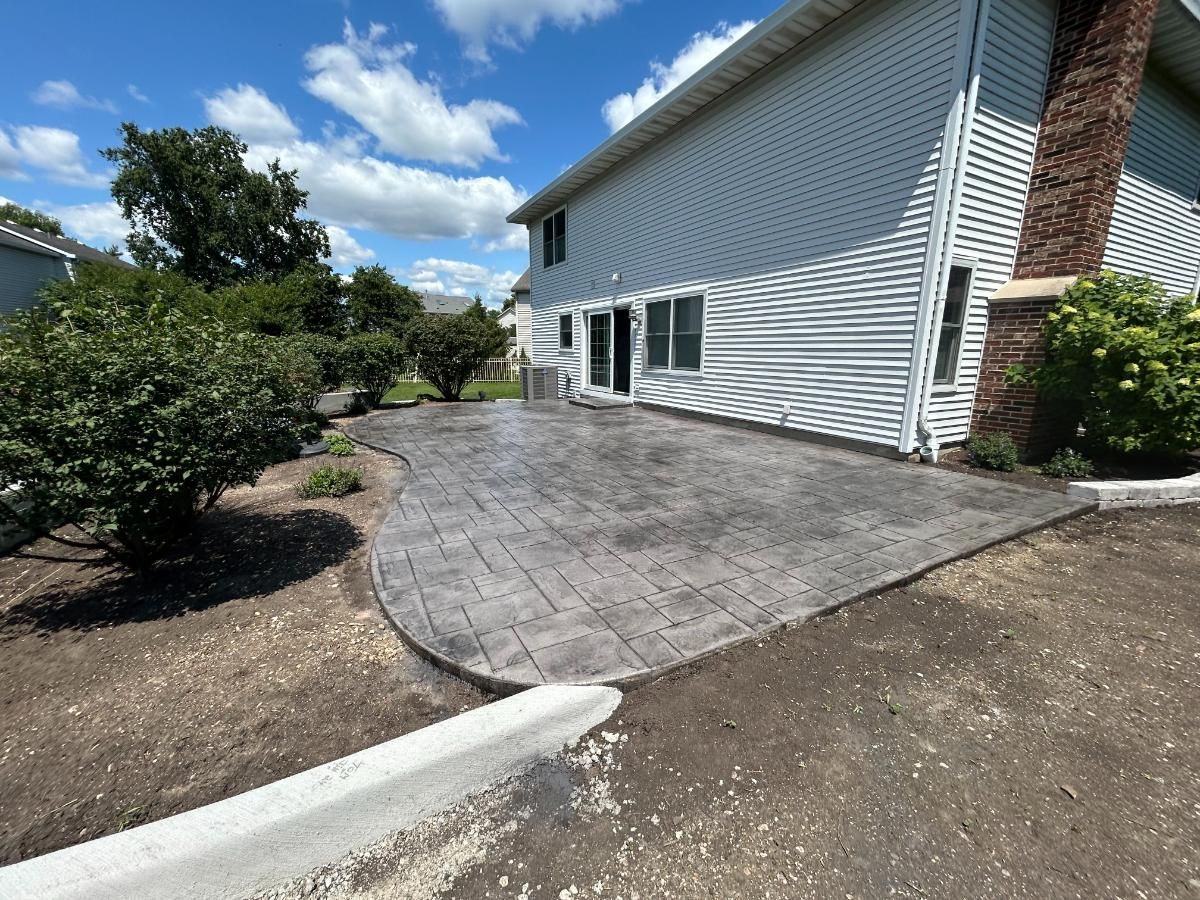
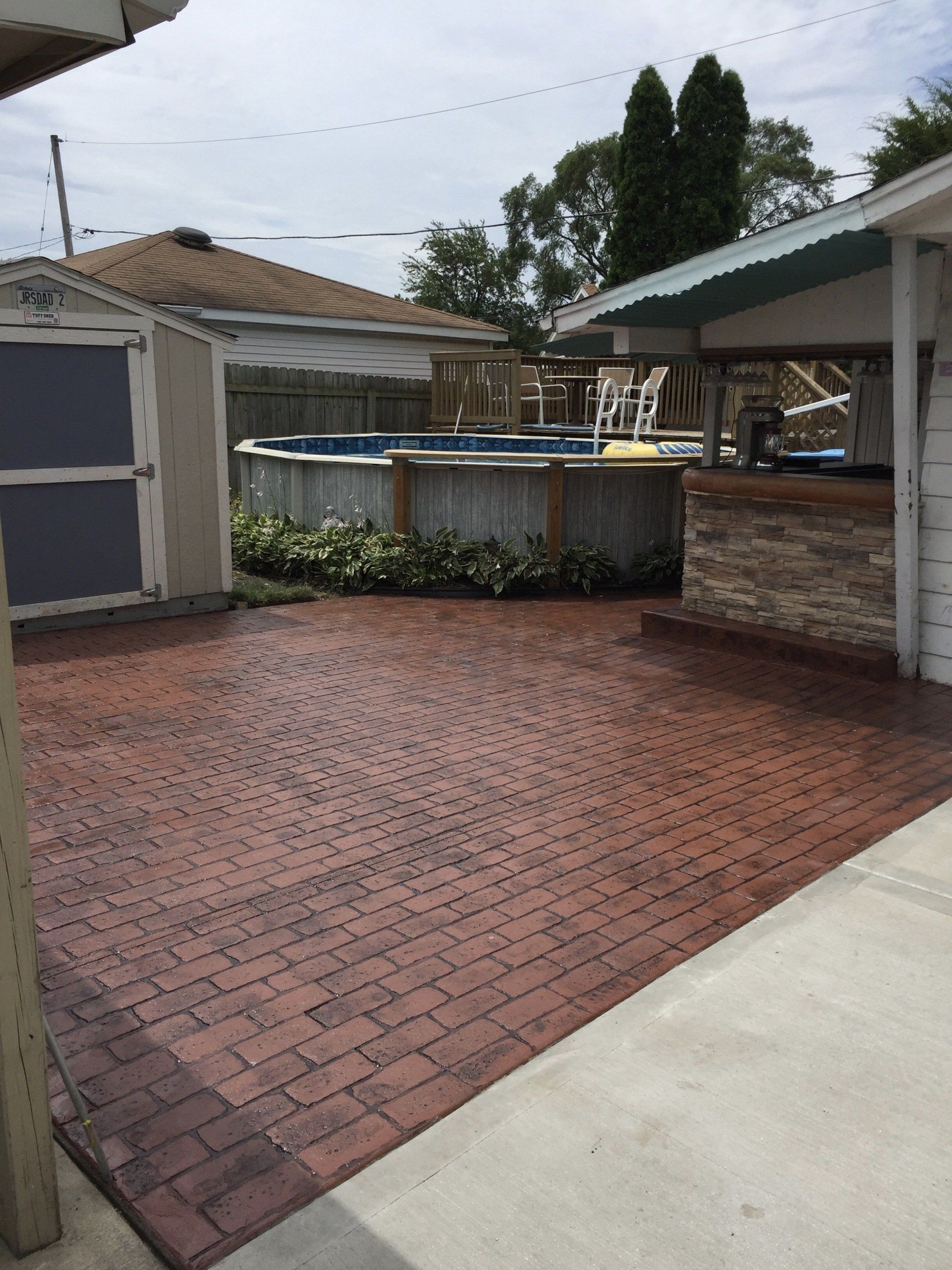
Stamped concrete can also be used for pool decks, but surface texture selection is especially important in this application. Smooth or lightly textured stamp patterns can become slippery when wet, so any stamped pool deck should incorporate a non-slip sealer or a texture level appropriate for wet-foot traffic.
Sealing: Protection That Has to Be Maintained
Sealing a concrete pool deck is not optional in Illinois — it's essential maintenance. A quality concrete sealer creates a barrier against water infiltration, which is the primary driver of freeze-thaw damage. It also protects the surface from pool chemicals, UV exposure, and staining from outdoor use.
Penetrating sealers soak into the concrete and provide protection without changing the surface appearance. Film-forming sealers sit on top of the surface and can add a wet look or sheen. For pool decks, a penetrating sealer with a non-slip aggregate in any topcoat is the recommended approach — providing protection without creating a surface that becomes dangerous when wet.
Pool deck sealers should be reapplied every two to three years, or when water no longer beads on the surface. Neglecting resealing is the single most common reason pool decks in the Addison area deteriorate faster than they should — particularly after Illinois winters, when an unsealed slab absorbs significant moisture and pays for it through freeze-thaw damage the following spring.
Drainage Design: Keeping Water Moving
A pool deck that holds water is a pool deck that deteriorates faster and becomes unsafe. Proper drainage design is essential and begins with the slope of the slab — typically a minimum one percent grade (about one-eighth inch per foot) away from the pool edge and toward drainage channels or landscaping.
Around the pool coping — the cap material at the pool's edge — a small gap or flexible joint allows for independent movement between the pool structure and the concrete deck. This is important because the pool shell and the concrete deck expand, contract, and settle at slightly different rates. A rigid connection between them is a stress point that cracks. A properly designed joint accommodates that movement without damage.
For homeowners in communities like Oak Brook and Elmhurst where outdoor living spaces are designed to perform as well as they look, working with a contractor who understands drainage design as part of the overall pool deck system — not as an afterthought — makes a meaningful long-term difference.
Illinois Winters and Your Pool Deck
Summer gets most of the attention when homeowners think about pool decks, but Illinois winters are where pool deck durability is truly tested. A deck installed without proper mix design, base preparation, and sealing will show the consequences within one or two winters — scaling, cracking, and surface deterioration that accelerates with each additional freeze-thaw season.
The same properties that make a pool deck safe and comfortable in summer — its exposure to water and its position on the exterior of the property — make it especially vulnerable in winter. Water that soaks into a poorly sealed or inadequately mixed deck freezes, expands, and begins the cracking cycle.
Homeowners across Addison, Elmhurst, and the surrounding communities who invest in a properly specified and installed concrete pool deck get a surface that handles both July afternoons and February freeze-thaw cycles reliably for decades. If you're planning a new pool installation or replacing an aging deck, RJ Concrete serves the
Elmhurst area and surrounding western suburb communities with pool deck installations built to those standards.
Frequently Asked Questions
What is the best concrete for pool decks in Illinois?
The best concrete for pool decks in Illinois is a high-strength, air-entrained mix with a minimum compressive strength of 4,000 PSI and a low water-to-cement ratio. The higher strength produces a denser, less porous slab that resists water infiltration. Air entrainment is essential for freeze-thaw resistance — the microscopic air voids in the mix allow water to expand when it freezes without cracking the surrounding concrete. Both properties are especially important in Illinois, where pool decks face summer moisture exposure and winter freeze-thaw cycles year after year.
Are concrete pool decks slippery?
Concrete pool decks can be slippery if they are finished with an overly smooth surface or sealed with a high-gloss sealer that reduces traction when wet. The solution is surface finish selection — a broom finish or exposed aggregate surface provides meaningful traction for wet bare feet. Any sealer applied to a pool deck should include a non-slip additive or be specified as a matte, slip-resistant product. When properly finished and sealed, a concrete pool deck is a safe surface for poolside use.
How long do concrete pool decks last?
A properly installed and maintained concrete pool deck typically lasts 25 to 30 years or more. Longevity depends on the quality of the installation — mix design, sub-base preparation, reinforcement, and control joints — and on consistent maintenance, primarily resealing every two to three years. Illinois freeze-thaw conditions place additional demands on pool decks compared to warmer climates, making installation quality and sealing discipline especially important for maximizing lifespan.
How thick should a concrete pool deck be?
A minimum of four inches is standard for residential concrete pool decks. Five to six inches is recommended for areas subject to heavier loads, such as sections supporting outdoor kitchen equipment, hot tubs, or large furniture arrangements. Consistent thickness throughout the slab is important — thin spots are stress concentration points where cracking is more likely to originate.
Can an existing pool deck be resurfaced instead of replaced?
Resurfacing is an option when the existing slab is structurally sound — meaning no significant cracking, heaving, or base problems — but the surface has deteriorated cosmetically. If the underlying slab has structural issues, resurfacing over it will not solve those problems and the new surface will reflect the same damage within a short time. A professional assessment is the best way to determine whether resurfacing or full replacement is the right approach for a specific deck.
What is exposed aggregate and is it a good choice for pool decks?
Exposed aggregate is a concrete finish created by washing away the top layer of cement paste while the concrete is still fresh, revealing the stone and aggregate within the mix. The result is a pebbly, textured surface that is naturally slip-resistant and visually appealing. It is an excellent choice for pool decks because the texture is built into the slab rather than applied to the surface, meaning it doesn't wear away over time. Exposed aggregate is popular among homeowners in Elmhurst and Oak Brook who want a pool deck that is both safe and attractive.
How soon after installation can a new pool deck be used?
Light foot traffic is generally safe within 24 to 48 hours of the pour. Furniture placement and heavier use should wait a minimum of seven days. The pool should not be filled or used until the deck has fully cured — typically 28 days for full structural strength. Your contractor will advise on specific timelines based on weather conditions at the time of the pour, since temperature and humidity affect curing rate.